A garden hose bought on sale is useless if a local order bans watering for three months of the year. A powerful gas lawn mower stays in the garage when the town only allows mowing on weekdays, between 8:30 a.m. and noon. Choosing the right equipment to landscape and maintain an outdoor space starts with checking that you can actually use it, at the right time and under local conditions.
Water restrictions vary by municipality and can change during the season. Before investing in an irrigation timer or a surface pump, simply check the VigiEau website and the local orders that apply to your address. The Nord prefecture reminds residents that drought levels change which activities are permitted, sometimes overnight.
Water restrictions and neighborhood noise: two factors that shape your purchases
Have you noticed that some neighbors can mow on Sunday mornings without a problem, while others receive a letter from the town hall? Permitted hours for power tools are set by local orders, not by a single nationwide rule. A leaf blower or electric hedge trimmer that’s perfectly suited to your yard can become a source of conflict if you don’t know the hours allowed in your area.
Before choosing power equipment, make two checks. First, contact your town hall to find out the permitted hours for mowing and outdoor DIY work. Second, consider how close your neighbors are. A city garden surrounded by adjoining properties calls for different equipment than an isolated rural plot.
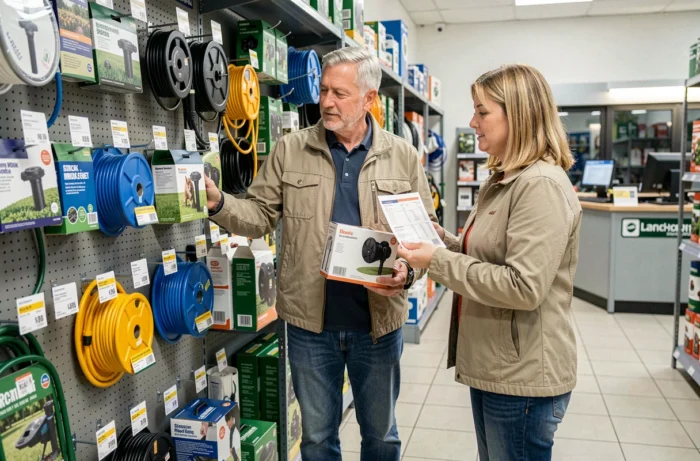
The same logic applies to watering. A drip irrigation system uses far less water than an oscillating sprinkler and is often still allowed during drought watch periods. Installing a rainwater collection tank connected to a low-pressure timer can help you work around some restrictions while lowering your water bill. Several online catalogs, such as the one offered by equipotto.fr, bring together this type of equipment and the technical specifications you need to compare products.
Repairability ratings and spare parts: choose garden tools built to last
The purchase price of a lawn mower or hedge trimmer says nothing about its true cost over five years. A cheap appliance whose motor fails after three seasons, with no replacement parts available, costs more than a model priced a few dozen euros higher but with a strong repairability rating.
Repairability ratings also apply to electric lawn mowers. The official information sheet, updated on July 7, 2025, lists corded, battery-powered and robotic lawn mowers among the products covered. This score out of 10 takes into account the availability of technical documentation, the cost of spare parts compared with the price of a new product, and how easy the appliance is to take apart.
Another practical benchmark: spare parts must remain available for ten years after the last new unit of a model is placed on the market, for motorized gardening tools. This period doesn’t guarantee that repairs will always be cost-effective, but it gives you a way to compare two lawn mowers or brush cutters using a factor rarely displayed in stores.
Why does this matter so much? Because a repairable tool remains usable even when the manufacturer releases a new model. Check the rating in store or on the product page before placing your order.
Garden furniture materials: choose based on the upkeep you can realistically manage
Garden furniture is often the first visible purchase when setting up an outdoor space. The usual instinct is to compare prices and styles. A more reliable factor is how much time you’re willing to spend on maintenance each season.
- Wood (acacia, eucalyptus, treated pine) needs a wood cleaner or protective oil once or twice a year. Without this upkeep, it turns gray and may split. It has a warm look, but maintaining it takes real time.
- Aluminum doesn’t rust, can be cleaned with plain water, and withstands the elements without treatment. It’s a good choice for gardens exposed to wind or damp conditions, but it gets hot in direct sunlight.
- Woven resin withstands UV rays and rain without any special maintenance. Its lifespan depends on the quality of the weave: thick, rounded strands last longer than low-grade flat weaving.
An aluminum garden furniture set takes five minutes to clean, while an exotic hardwood set needs half a day of sanding and oiling at the start of the season. Neither option is better or worse, but your choice should reflect how much time you actually have.
Hand tools or power tools: choosing the right option for your yard size
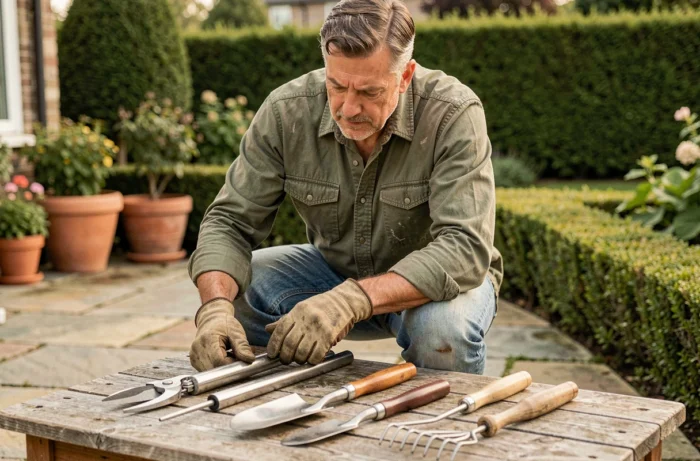
For a small urban garden of a few dozen square meters, a quality pair of pruning shears, a spade and a rake will cover most needs. Investing in a gas brush cutter to trim three meters of edging makes no sense, financially or practically.
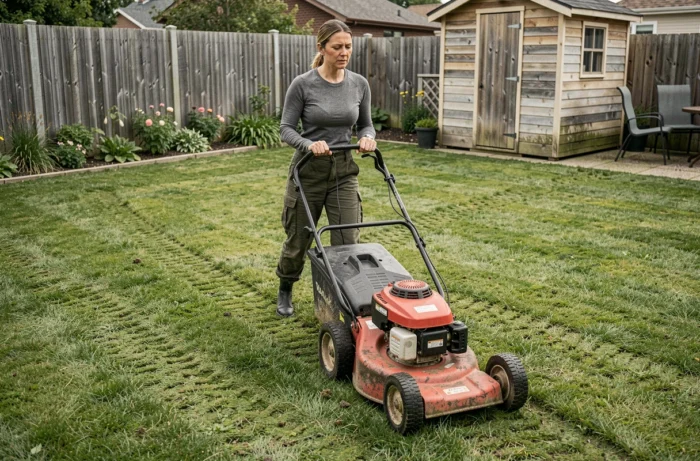
The tipping point is roughly the area of lawn you mow regularly. For less than about 100 square meters of lawn, a manual reel mower is enough, makes almost no noise and isn’t subject to any time restrictions. For larger areas, a battery-powered electric mower offers a good balance of power and quiet operation.
Think about storage, too. Every power tool needs a dry, well-ventilated space. If you don’t have a garden shed or garage, compact battery-powered tools (hedge trimmers, leaf blowers) are easier to store than bulky gas-powered equipment and its fuel can.
Three things to check before every purchase
- Whether the equipment complies with local restrictions (noise, water): quiet or water-efficient equipment gives you more opportunities to use it.
- The repairability rating and how long spare parts will be available: choose brands that clearly display this information.
- Whether it suits your yard size and available storage: a tool that’s too powerful for your yard is a poor investment.
Choosing reliable outdoor equipment means balancing three realities: what local regulations allow, what your garden requires and what the manufacturer guarantees in terms of repairability. A purchase that meets all three criteria will remain useful for several seasons, without any unpleasant surprises when it’s time to use it.