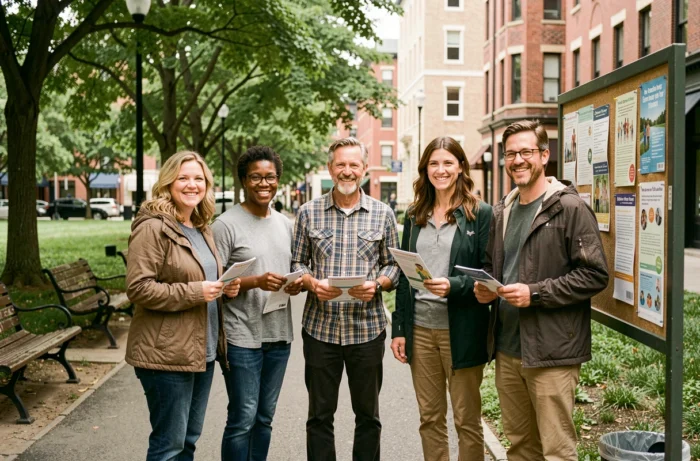
When a municipality installs drinking fountains in its parks, when a vaccination campaign targets teenagers, or when an occupational health physician assesses noise levels in a workshop, all these actions fall under public health. The term covers far more than hospital medicine: it refers to the collective efforts made to protect and improve the health of an entire population.
What a definition focused on overall well-being changes
Most people associate health with the absence of disease. The World Health Organization, founded in 1948, established a very different framework. It defines health as a state of complete physical, mental and social well-being. This definition places the body, mind and living conditions on equal footing.
In practical terms, this means that a country where hospitals function well but social isolation is on the rise is not meeting this goal. Public health therefore also addresses housing, nutrition, education and social connections. To explore the WHO definition of public health in more depth, it is important to understand that it involves collective responsibility, not just that of the patient or healthcare provider.
In 1952, the WHO added a complementary definition: public health is “the science and art of preventing disease, prolonging life and improving the mental and physical vitality of individuals”. The word “art” is significant. It acknowledges that protecting a population requires adaptability and practical, on-the-ground experience—not just protocols.

Social determinants of health: why your ZIP code matters as much as your genetic code
Have you noticed that some chronic diseases affect certain neighborhoods more than others? The WHO uses the concept of social determinants of health to explain these disparities. These are the circumstances in which people are born, grow up, live, work and age.
These determinants encompass very tangible realities:
- Access to varied, affordable food, which differs significantly depending on location and household income.
- Air quality, housing and drinking water, which shape the risk of respiratory and infectious diseases even before any medical intervention.
- Education and employment, which influence people’s ability to understand prevention messages and access healthcare.
- Social connections and mental health, which are often underestimated in health policies despite having a major impact on life expectancy.
Addressing these determinants reduces health inequalities more effectively than simply adding hospital beds. This is the guiding principle of contemporary public health: intervene early, where disparities begin to widen.
Everyday prevention: programs that turn theory into action
For people living in a country, prevention remains the most visible pillar of public health. In France, several programs show how the WHO definition translates into practical action.
Mon bilan prévention: taking action at key stages of life
The “Mon bilan prévention” program offers a personalized consultation with a healthcare professional at certain ages. Topics range from sleep and physical activity to mental health and sexuality. This approach also targets middle adulthood, a period often overlooked between early childhood and old age.
Cervical cancer: how vaccination and screening work together
Cervical cancer screening is available to women aged 25 to 65. Depending on age, it involves either a cytology test or an HPV test. France’s National Health Insurance reminds people that vaccination against human papillomavirus does not replace screening: the two measures complement each other. This is a typical example of public health combining individual prevention (vaccination) with a population-wide organized program (screening invitations).
Physical activity as a public health tool
Health policies increasingly incorporate physical activity as a preventive tool. Prescribing exercise is not just about comfort: it helps address cardiovascular disease, diabetes and depression. This approach reflects a vision of public health that changes habits and living environments, going beyond curative care.

The One Health approach: when public health extends beyond humans
One of the newest perspectives in public health has a telling name: “One Health”. The principle is simple. Human health, animal health and ecosystem health are interdependent.
Large-scale deforestation brings wild species closer to human populations and encourages the emergence of new infectious diseases. Excessive antibiotic use in livestock farming accelerates bacterial resistance in humans. These connections are not theoretical: they now shape prevention strategies in many WHO member countries.
This approach expands the scope of public health far beyond hospital services. It involves veterinarians, ecologists and urban planners. For citizens, this can mean measures that may seem surprising: monitoring water quality in relation to farming practices, controlling zoonotic diseases at borders, and designing cities to limit heat islands.
Universal health coverage: the goal that guides the WHO’s work
The WHO has 194 member states and coordinates its programs across six regions. Its main goal can be summed up in one phrase: to help every person achieve the highest possible level of health, wherever they live.
Universal health coverage means that everyone can access the health services they need without facing financial hardship. This includes prevention, treatment, rehabilitation and palliative care. In countries where coverage remains incomplete, preventable diseases continue to claim lives on a large scale.
For people living in a country like France, universal health coverage may seem guaranteed. It never is completely. Medical deserts, waiting times and people forgoing care for financial reasons show that ensuring real access to health services remains an ongoing challenge, even in the best-resourced member states.
Public health is not an abstract concept reserved for international institutions. It is at work in a school cafeteria serving balanced meals, in a neighborhood’s free screening center, and in a bike lane replacing a highway lane. Every collective decision that protects the health of a group, however modest, contributes to the approach set out by the WHO more than seven decades ago.