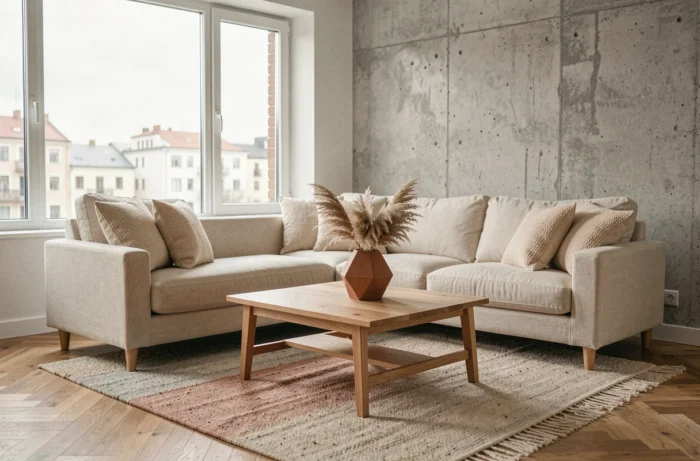
Repainting a wall, changing a light fixture, laying a new floor covering: these decorative gestures take on a different dimension when they are part of a real estate project. In 2024, interior decoration trends encompass both aesthetics and regulatory constraints, as well as the increasingly precise expectations of buyers or tenants.
Decorative renovation and energy performance: a duo that should not be separated
You may have noticed that real estate listings now prominently display the energy performance certificate (DPE)? Since January 1, 2025, properties rated G can no longer be rented under a new lease. Class F will follow in 2028, and class E in 2034.
This timeline changes the game for anyone considering refreshing a property before putting it on the market. A trendy coat of paint on poorly insulated walls will not be enough to make an apartment rentable. Decoration must be aligned with insulation work, not replace it.
The decree of March 25, 2024, has also modified the DPE thresholds for properties under 40 m². According to calculations from the ministry reported by TF1 Info, 82,777 properties rated G have changed their label thanks to this update.
Before choosing between a simple facelift and a more extensive renovation, it is essential to check the updated DPE of the property. This verification conditions everything else: budget, scope of work, and therefore the resulting decorative choices. Professionals listed on the real estate page of Les Embellies Déco precisely support this alignment between aesthetic enhancement and technical constraints.
Bright colors and raw materials: decorative palettes that enhance a property
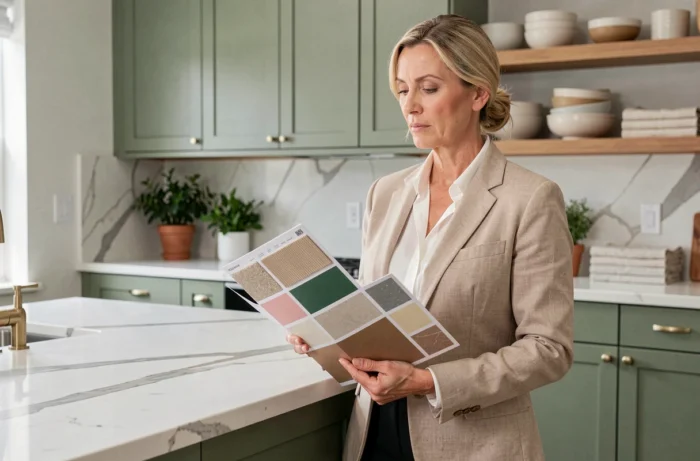
Neutral tones (beige, light gray, off-white) have long been the default choice for selling. The logic: to appeal to the greatest number. In 2024, this approach is receding in favor of bold colors that give character to spaces.
Copper orange, olive green, Klein blue: these shades appear on an accent wall, a piece of furniture, or textile accessories. The idea is not to paint four walls bright yellow, but to introduce a touch of color that anchors a room in an identifiable style.
Wood and rattan as a common thread
When it comes to materials, wood remains a safe bet. Light oak for a Scandinavian style, walnut for a more upscale interior, raw wood for a workshop atmosphere. Rattan is also making a comeback: mirrors, armchairs, light fixtures.
These natural materials work well in real estate projects because they age without going out of style. A potential buyer perceives solid wood or rattan as a sign of quality, whereas a piece of melamine particleboard quickly looks tired visually.
- Light oak adapts to small spaces by bringing brightness without overloading the room.
- Terracotta, in paint or tiles, warms up north-facing rooms and pairs well with brass or copper accessories.
- Textiles in linen or raw cotton (curtains, cushions, throws) add texture without burdening the decoration budget.
Reuse and vintage furniture: sourcing as a real challenge
Vintage style and the reuse of old materials are among the most visible decoration trends in 2024. Reclaimed cement tiles, old doors transformed into headboards, thrifted furniture: the visual effect is appealing. But the availability of second-hand pieces remains unpredictable.
An old tile spotted at a salvage yard may only cover six square meters when ten are needed. A 1960s dresser found at a flea market exists only in one copy. For a real estate project with a tight schedule, this uncertainty poses a concrete problem.
Anticipate rather than suffer
The solution lies in building up a stock in advance. Identify pieces several months before the start of work, have a plan B with new materials for each vintage element planned. Securing reused materials before launching the project avoids delays and last-minute compromises.
This realism does not detract from the appeal of vintage. A property furnished or decorated with thrifted pieces stands out in listing photos. Buyers see a “lived-in” interior, more desirable than a space that is too polished.
Decoration and home staging: what really makes the difference in a real estate project
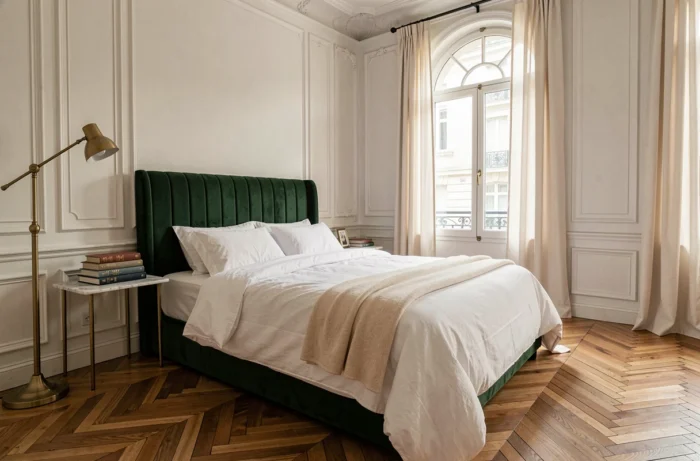
The decoration trend that matters most in a real estate context in 2024 is neither a color nor a material. It is the coherence between aesthetic choices and the actual use of each room.
An 18 m² living room dominated by an oversized sofa will appear smaller than it is. Conversely, furniture proportionate to the spaces provides an immediate understanding of the volumes. Buyers project their own lives into a readable space, not into a catalog.
- Favor one or two coherent styles per room rather than multiplying inspirations (a Scandinavian-industrial mix works, a mix of five styles creates confusion).
- Limit decorative accessories to three or four elements per visual zone: a vase, a book, a plant are sufficient on a shelf.
- Pay attention to lighting: a well-chosen pendant light transforms a space more than an expensive piece of furniture. Brass or black metal fixtures are among the most sought-after this year.
Decorating a property in 2024 requires juggling personal taste and market reality. Bright colors bring character, wood and vintage create authenticity, but every decorative choice must pass the filter of the DPE and the work schedule. A trendy interior that ignores the energy performance of the building risks staying on the market longer than expected.