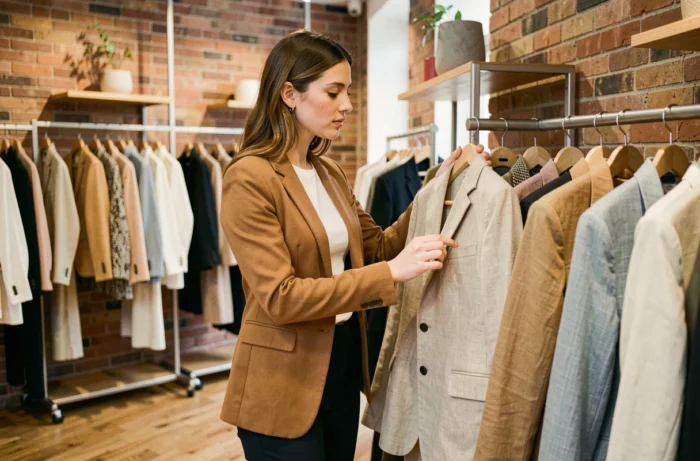
Comparing fashion trends from one season to another often involves measuring differences in price, volume, and purchasing channels. The second-hand textile market is experiencing strong growth in France, to the point of altering the usual framework: everyday style is no longer built solely in new shops, and fashion trends now incorporate channels that did not exist ten years ago.
Second-hand and new channels: comparison of fashion purchasing channels
The growth of second-hand does not follow a uniform curve. According to data reported by Le Parisien, thrift stores and second-hand corners in retail chains are progressing more than sales between individuals on platforms. This discrepancy changes the way a trendy wardrobe is built.
| Purchase Channel | Recent Dynamics | Dominant Piece Types | Interest for Everyday Style |
|---|---|---|---|
| Physical Thrift Stores | Strong growth | Vintage pieces, denim, jackets | Access to cuts unavailable in new |
| Second-hand Corners in Retail Chains | Strong growth | Basics from well-known brands | Ease of trying on, minimal guarantee |
| Platforms for Individuals | More moderate growth | All categories, variable quality | Attractive prices, sorting necessary |
| Classic New Shops | Stable | Complete seasonal collections | Wide choice, catalog prices |
This table highlights a often overlooked point: buying second-hand does not systematically guarantee a lower price. Le Parisien notes significant average price discrepancies between brand thrift stores, platforms for individuals, and charity shops. The purchase channel changes both the price and the piece itself.
To refine your search on current trends and pieces, consulting the site renee-fashion.fr in detail allows for cross-referencing inspirations between new and second-hand channels.

Autumn-Winter Fashion Trends: Pieces that Cross Seasons
Competitors generally list sweaters, pants, dresses, and jackets without hierarchy. The analytical approach invites us to look at which pieces return from one season to another and which disappear.
High Longevity Pieces in a Women’s Wardrobe
Jeans, regardless of cut (barrel, straight, wide), remain present in all fashion trend analyses. The structured jacket (blazer, short trench) consistently appears in autumn-winter and spring-summer selections. These two categories form the foundation of a sustainable everyday style.
The oversized sweater illustrates an interesting phenomenon: this piece, historically associated with winter, migrates to warm seasons in finer materials. Its versatility makes it a worthwhile investment for at least two seasons.
Short-Lived Pieces
Highly marked prints (excessive geometric patterns, oversized logos) and ultra-saturated colors generally lose relevance after one season. Very specific shades to a given collection rarely see their recurrence confirmed beyond a year.
A wardrobe designed for everyday use benefits from limiting these ephemeral pieces to one or two purchases per season, rather than dedicating the majority of the budget to them.
Textile Regulation and Digital Passport: What Changes for the Consumer
The European regulation ESPR (Ecodesign for Sustainable Products Regulation) is gradually introducing the Digital Product Passport (DPP) for textiles. This system will require brands to provide traceability, composition, and environmental impact information accessible via a QR code or an NFC chip integrated into the garment.
For consumers looking to build a personal style, this passport changes the game on several levels:
- The exact composition of fibers becomes verifiable before purchase, allowing for an assessment of the actual durability of a trendy piece.
- Information on the production chain enables more informed choices between two visually similar items but made under different conditions.
- For second-hand, the DPP facilitates resale by providing a reliable product history, which enhances trust between buyer and seller.
Traceability becomes a criterion of style as much as of consciousness. A garment whose origin and estimated lifespan are known is worn with a different assurance than one purchased blindly.
Building an Everyday Look: Concrete Trade-offs by Category
Rather than a list of generic advice, here are the trade-offs that produce a real impact on a wardrobe.
The ratio of durable pieces to trendy pieces constitutes the first lever. Prioritizing basics (jeans, jackets, quality sweaters) and reserving a small portion of the budget for seasonal pieces (trendy color, current cut) limits purchase regrets.
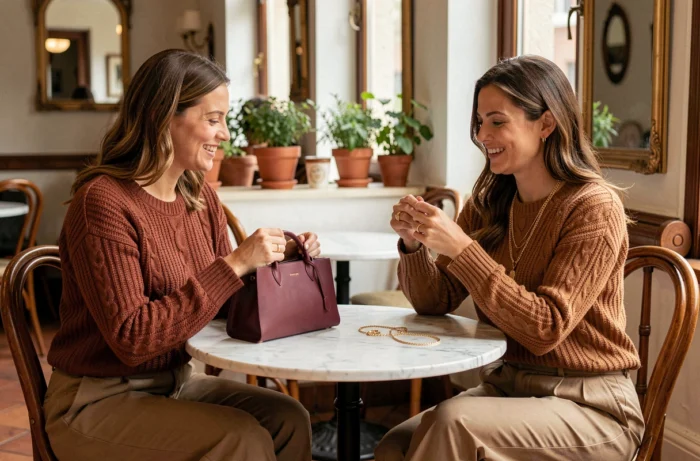
The second trade-off concerns the channel. Refashion identifies that second-hand represents a still limited share of textile sector volumes but contributes significantly to carbon benefits. Mixing new and second-hand channels in the same look produces more unique silhouettes than a total look from a single retailer.
The third point relates to colors. Autumn-winter palettes revolve around neutral tones (beige, gray, navy) with one or two seasonal colors added. Pairing a colorful piece with neutral basics is enough to anchor an outfit in fashion trends without tipping into excess.
- A straight or barrel jean worn with an oversized sweater and a structured jacket covers most everyday situations.
- One single piece in a seasonal color (scarf, bag, top) is enough to refresh a neutral look.
- Checking the composition via the label (or tomorrow the DPP) before purchase avoids disappointments regarding the garment’s durability after washes.
Fashion is evolving towards a model where product data, purchase channel, and longevity of pieces weigh as much as cut or color. The most relevant fashion trends are those that withstand two seasons, not those that fill a feed for two weeks.