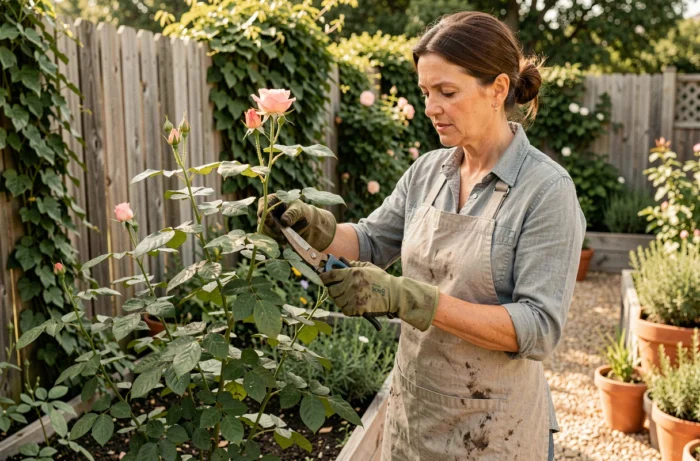
Gardening in France is undergoing a period of accelerated change. Repeated droughts, water restrictions, and the ban on chemical pesticides for individuals (effective since January 1, 2019) require a rethink of daily gardening practices. Here are the gardening trends and tips that are redefining the practice this season.
Mulching and ground cover: the technical foundation to master above all else
Mulching refers to a layer of organic or mineral materials placed on the soil around plants. Its primary role is to limit evaporation, but it also acts as a thermal regulator and a natural barrier to weed growth.
With the generalization of summer drought episodes, mulching has shifted from being an option to a systematic reflex. Gardeners who cover their soil in vegetable gardens as well as at the base of trees notice a significant reduction in the watering needed, even in the height of summer.
Ground cover plants complement this logic. Thyme, white clover, or creeping sedum occupy the soil surface vibrantly, limit erosion, and nourish microorganisms. Where mulching decomposes and needs to be renewed, ground cover establishes itself permanently.
An increasing number of French gardeners combine both approaches: thick mulching in annual cultivation areas (vegetable gardens, seasonal flower beds) and permanent ground cover in ornamental spaces. This strategy also reduces manual weeding, the only method allowed since the zero pesticide regulation for individuals. Several tips and feedback on these practices can be found in recent articles on Le Jardineur, which track these developments throughout the seasons.
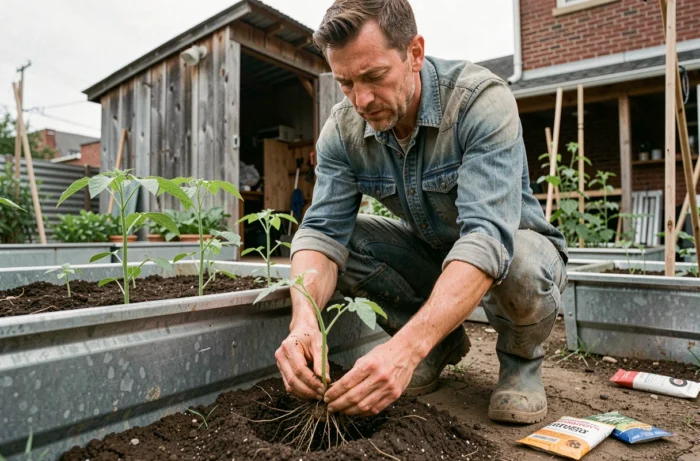
Shifted sowing calendar: why autumn replaces spring
Traditionally, spring concentrated the majority of sowings and plantings. This calendar is shifting. A significant portion of French gardeners has already changed their planting dates to avoid summer heat peaks, according to a survey reported by Futura-Sciences.
Sowing in autumn has several concrete advantages:
- Young plants benefit from natural autumn and winter rains to develop their root systems, without intensive watering.
- Spring bulbs (tulips, daffodils, crocuses) need to be planted before the ground freezes, ideally as early as September.
- Some vegetables (broad beans, garlic, onions) gain several weeks of earliness when planted in autumn rather than late winter.
Shifting sowing to autumn reduces dependence on summer watering. This change in rhythm requires planning effort, but it secures harvests against climatic uncertainties.
Rainwater harvesting: a priority installation
The installation of rainwater collectors is no longer reserved for large rural gardens. In the context of recurring water restrictions, this type of setup has become essential in both urban courtyards and suburban gardens.
The principle remains simple: a tank connected to a downspout stores rainwater for watering the vegetable garden, flower beds, and potted plants. The usable capacity depends on the available roof area and the garden’s needs.
Installation points of caution
A poorly positioned or unfiltered collector quickly turns into a mosquito breeding ground. An airtight lid and a filter upstream of the tank are necessary. In winter, above-ground tanks must be drained to prevent freezing that can crack the material.
For small spaces, flat or wall-mounted models exist and can be integrated against a facade without encroaching on the cultivable area. Even a small-capacity collector can cover the watering of a balcony or small vegetable garden for several weeks without rain.
Garden maintenance without pesticides: effective alternatives
Since 2019, individuals can no longer buy, use, or store chemical pesticides (herbicides, insecticides, fungicides). This ban, extended to communal spaces since 2022, has profoundly transformed the routine maintenance of gardens.
Effective alternatives rely on three pillars:
- Mechanical weeding: hoe, oscillating weeder, or weeding knife. These tools eliminate weeds without disturbing soil life.
- Natural preparations: nettle or horsetail extracts as foliar treatments against certain pests and fungal diseases. Their effectiveness is preventive rather than curative.
- Functional biodiversity: installing plants that attract beneficial insects (ladybugs, lacewings, hoverflies) naturally limits populations of aphids and other pests.
This approach requires more observation. Identifying a problem early, before it spreads, replaces systematic chemical treatment. The gardener becomes a manager of an ecosystem, not an applicator of products.
Adapting plantings to new climatic conditions
Planting advice is evolving rapidly. Species once reserved for the south of France (lavender, olive trees, fig trees) are now establishing themselves much further north. Conversely, some water-demanding or heat-sensitive plants are showing their limits in regions where they previously thrived without difficulty.
Choosing plants suited to the actual rainfall of one’s area is becoming the main selection criterion, even before aesthetic considerations. Mediterranean perennials, ornamental grasses, and deep-rooted shrubs are better able to withstand prolonged dry spells.
The vegetable garden is also transforming. Old varieties of tomatoes or squash, selected for their hardiness, are regaining ground against hybrids that are water-hungry. Some gardeners are experimenting with crop associations that create natural micro-shades on the soil, protecting the most fragile seedlings.
The gardening season is no longer just about following a fixed calendar. Adapting practices, plant choices, and layout to local climatic realities produces more reliable results than applying generic recipes. The garden that will perform best this autumn is the one that has integrated these constraints from the planning stage.