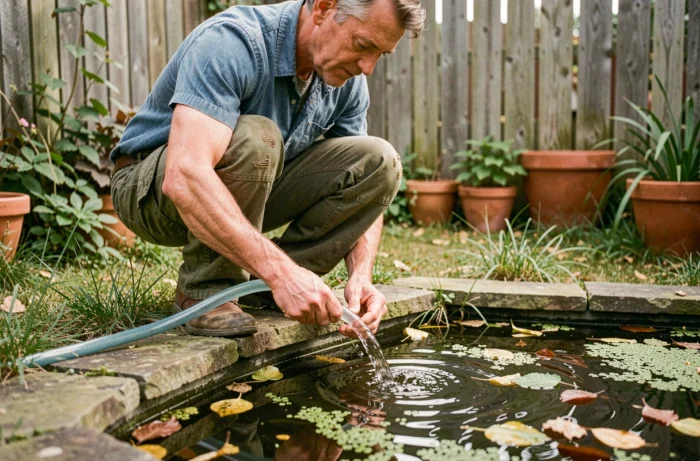
Emptying a garden pond without a pump relies on a simple physical principle: gravity. As long as the water outlet is lower than the pond’s level, the water flows naturally through a primed hose. This technique, called gravity siphoning, allows for the removal of most of the volume without any electrical connection. The remaining residual water must then be managed, as gravity alone is not enough to extract it.
Elevation and discharge area: two parameters to check before starting
Before touching the hose, you need to identify the lowest point of the accessible terrain. Siphoning only works if the outlet end of the hose is below the bottom of the pond. A perfectly flat garden makes the method much less effective.
The choice of the water discharge area deserves as much attention as the draining itself. Water from a pond loaded with organic matter, algae, or treatment residues can erode a bank, drown fragile plants, or flow into a neighboring property. Directing the flow towards a stormwater drain, a ditch, or a permeable area of land away from the foundations avoids these inconveniences.
To learn how to empty a pond without a pump methodically, it is also best to remove sensitive fish and aquatic plants beforehand. A clean bucket filled with pond water is enough to keep them during the operation.
Siphoning a garden pond: priming the hose without sucking with the mouth
Classic siphoning involves sucking the air out of the hose with the mouth to start the flow. This technique risks swallowing dirty water. A cleaner variant exists and works just as well.
Priming by completely filling the hose
The method relies on a simple action: completely fill the hose with clear water before placing it. Block both ends (with your thumbs or stoppers), place one end at the bottom of the pond, then lower the other towards the discharge area below. By releasing both stoppers simultaneously, the water from the pond is drawn by siphon effect without any mouth suction.
A standard garden hose of common diameter is suitable for a small ornamental pond. For a larger volume, a hose with a larger diameter speeds up the flow. The flow stops by itself when the water level reaches the mouth of the hose in the pond.
Variant with a Y-connector or a funnel
If filling a long hose proves difficult, attaching a funnel to the high end and pouring water by gravity allows for gradual removal of air. The flow starts as soon as the hose no longer contains an air bubble.
Residual bottom of the pond: finish the draining manually
Gravity siphoning always leaves a layer of water at the bottom. This residual layer, often loaded with silt and debris, cannot be evacuated by the hose once the level is too low to maintain the siphon effect.
Three complementary options allow you to finish the job:
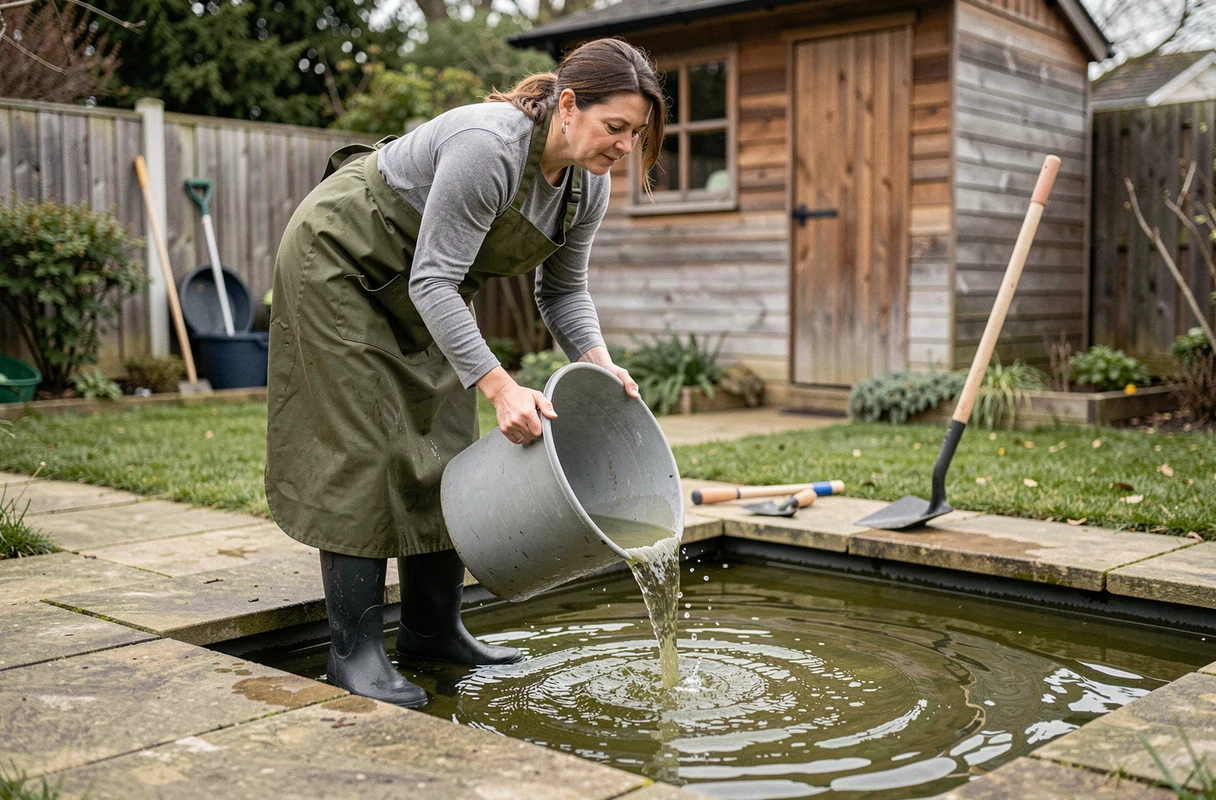
- The bucket and sponge remain the most direct solution for small ponds. Scoop out the bulk of the volume with a bucket, then absorb the last centimeters with a sponge or a wrung mop in a container.
- A wet and dry vacuum cleaner plugged into a socket protected by a 30 mA differential quickly sucks up the residual mud. This electrical safety point is often absent from practical guides but is essential whenever an electrical device is used near water.
- A bottom scoop, a simple long-handled container, allows you to scrape the silt without leaning into the pond. Useful when the depth exceeds the arm’s reach.
Cleaning the pond after draining: take advantage of the accessible bottom
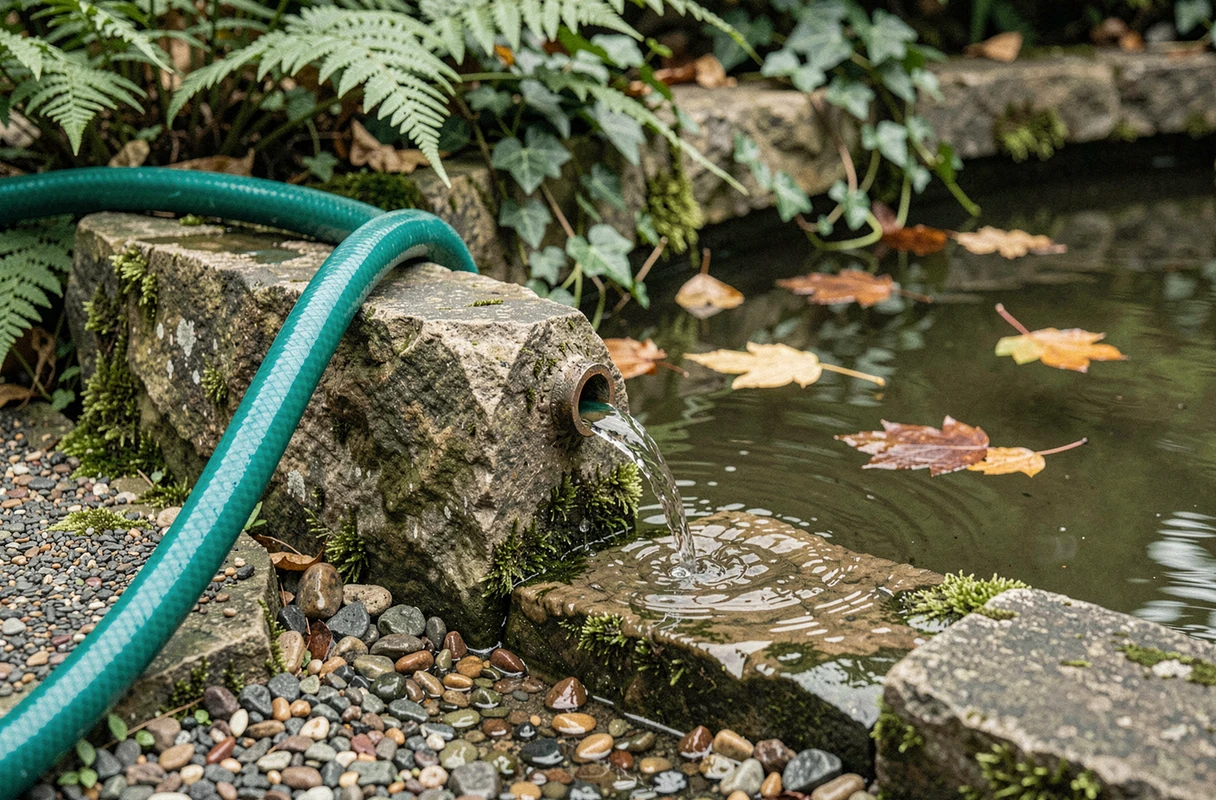
An emptied pond offers the opportunity to check the condition of the liner or coating. Micro-perforations are only visible on a dry liner. Running your hand over the entire surface helps detect rough spots or folds where silt accumulates.
The cleaning of the bottom and walls is done with clear water and a soft brush. Avoid detergents: their residues are toxic to fish and aquatic plants when refilling. A simple jet of water and mechanical brushing are sufficient to remove algae deposits and stuck organic matter.
Recovering some of the bottom silt as an amendment for the vegetable garden is a useful reflex. This mud is rich in nutrients. However, if the pond has been chemically treated, it is better to dispose of it at an appropriate collection point.
Avoid total draining: alternatives for regular maintenance
Completely emptying a pond remains a heavy operation, especially when it houses an established ecosystem. For regular maintenance without complete draining, partial siphoning works well: submerge the hose to the bottom, prime the siphon, and only remove one-third of the volume. This nitrate-laden water is replaced with fresh water, limiting algae proliferation.
Aquatic plants play an active role in the natural filtration of the pond. A well-planted pond with oxygenating species and bank plants requires fewer complete drainings than a bare pond. Maintaining a plant cover of about one-third of the surface reduces the organic load and stabilizes the biological balance.
Total draining is mainly justified in case of a leak to repair, excessive silt accumulation at the bottom, or liner replacement. Outside of these situations, regular partial siphoning and good plant cover keep the water clear without resorting to a pump or emptying the pond of its inhabitants.