
We wake up in a sweat, the voice of a father or mother still echoing, and for a few seconds we try to understand if what we just experienced was real. Dreaming of deceased parents is a common experience, sometimes soothing, sometimes unsettling. This type of dream often occurs in the weeks or months following a death, but it can also reappear years later, during a time of transition or vulnerability.
When the absence of dreams of deceased parents signals a blocked grief
Much is said about the dreams that occur after a loss. Less is said about their absence. Some people go through entire months without ever dreaming of the deceased, even when they expect or hope for it.
Psychiatrists describe a phenomenon called hyperactive grief: the grieving person throws themselves into work, social obligations, projects, to the point of leaving no psychological space for sadness. Sleep itself becomes functional, devoid of emotional imagery. The prolonged absence of dreams related to the deceased parent may then reflect this escape.
Conversely, when these dreams eventually appear, even late, it often signifies that sadness is beginning to find a space to express itself. We also observe forms of avoidant grief, where the person refuses any contact with memories (photos put away, room closed, conversations avoided), and ambiguous grief, which is common when the relationship with the parent was conflicted during their lifetime.
In practical terms, we can rely on the presence or absence of these dreams as one indicator among others to assess where we are in the grieving process. An article addressing the question of dreaming of deceased parents according to Foodies and Family reminds us that these nocturnal manifestations fully participate in the psychological work of loss.
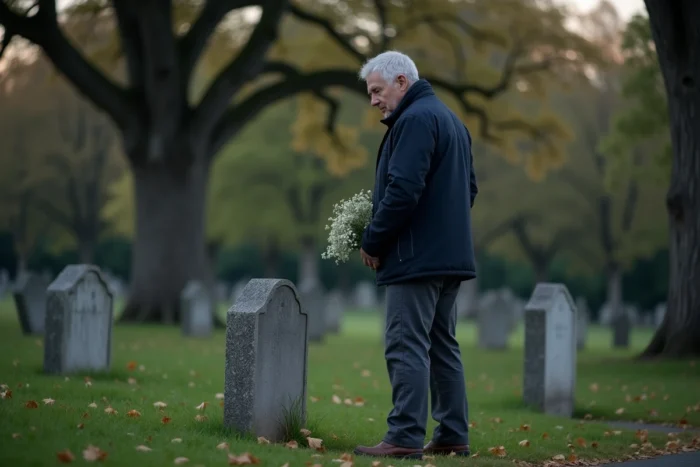
Dreaming of a deceased father or mother: what the dream scenario reveals
The content of the dream is as important as its frequency. Dreaming of a deceased parent who speaks, who remains silent, who appears sick or in good health does not produce the same effect upon waking, and does not convey the same psychological message.
When the deceased speaks in the dream
Hearing the voice of a deceased father or mother in a dream often corresponds to a need for advice or reassurance. According to C. G. Jung’s approach, the dreamer projects onto the deceased a function of authority or protection that they seek to regain. The words spoken in the dream deserve attention: they generally express what the dreamer would have wanted to hear while the parent was alive, or what they did not have the time to say.
When the parent appears sick or in distress
This scenario generates guilt. We wake up with the feeling of not having done enough. In reality, this type of dream reflects less a reproach from the deceased than an unresolved anxiety related to the last moments of the parent’s life. People who were unable to be present at the time of death report this kind of scenario more often.
When the parent is alive and healthy
This is the most disorienting dream upon waking, because it recreates a lost normalcy. The dreamer knows, somewhere, that the parent is deceased, but in the dream everything is intact. This gap between the dream reality and conscious reality corresponds to what psychology calls a form of temporary denial, which is not pathological as long as it remains limited to dreams.
Recurring dreams of deceased parents: recognizing when to seek help
An isolated dream, even an intense one, is part of the normal grieving process. The question changes when dreams become recurrent, overwhelming, or when they cause distress that spills over into the day.
Here are specific situations that justify seeking therapeutic support:
- Dreams of deceased parents recur several times a week for more than six months, with an emotional intensity that does not diminish
- Waking up is consistently accompanied by tears, anxiety, or a feeling of guilt that lasts for several hours
- One avoids sleeping or dreads bedtime for fear of having these dreams
- The total absence of dreams of the deceased is accompanied by permanent hyperactivity and a refusal to talk about the loss, even months after the death
Opinions vary on this point, but several grief professionals consider that the combination of recurring dreams and disruption of daily life constitutes a more reliable warning signal than the frequency of dreams alone. A psychologist specialized in grief can help decode these dreams and unlock what remains unresolved in the relationship with the deceased parent.

Interpretation of dreams of the deceased: between psychology and the emotional life of the dreamer
It would be a mistake to reduce these dreams to a single interpretation framework. According to Jung, dreaming of a deceased person is an integral part of the grieving process: the dreamer gradually breaks the ties not with the person themselves, but with what they represented on a conscious level (authority, security, unconditional love).
This interpretation does not contradict the dreamer’s intimate experience. Many people experience these dreams as a final exchange, a form of presence that cannot be explained solely by psychology. Both interpretations coexist without the need to choose between them.
What matters practically is what the dream produces upon waking. A dream that soothes, that gives the feeling of having received a message or of having been able to say goodbye, facilitates the grieving process. A dream that causes anxiety, that reactivates guilt, or that prevents moving on, deserves to be explored with a professional.
Keeping a dream journal for a few weeks allows one to identify recurring patterns: the dream location, the dominant emotion, the exchanged words. These elements, reviewed later, often provide clues about what remains unresolved in the relationship with the deceased parent, and about the direction the grief is taking.