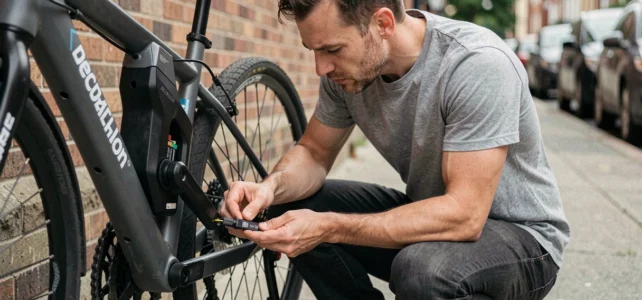
Electric bikes sold by Decathlon are equipping a growing number of urban and suburban cyclists in France. The Elops, Riverside, and Rockrider ranges cover various uses, from daily commuting to leisure mountain biking. With this massive distribution, feedback on breakdowns is multiplying on specialized forums and discussion groups.
Battery refusing to charge, assistance cutting out unexpectedly, console screen freezing: these symptoms recur with a regularity that deserves attention.
Connectivity and Wiring: The Invisible Breakdown of Decathlon E-Bikes
The majority of forum discussions about breakdowns of Decathlon electric bikes do not point to a faulty component per se. They converge on a more discreet issue: poorly connected or oxidized connectors and cables. On hub motor models as well as those equipped with a mid-drive motor, the wiring connects the battery to the controller, the controller to the motor, and the sensors to the display.
A loose connection at just one of these points is enough to cut off assistance or trigger an error code on the console. Users sharing Decathlon electric bike breakdowns on the forum often describe intermittent loss of assistance, which disappears after unplugging and then replugging the battery. This symptom almost always points to a connectivity issue, not a motor defect.
Oxidation of contacts is accelerated by rides in the rain and outdoor storage. Regular cleaning of the plugs with a dry cloth and applying dielectric grease to the connectors can prevent a significant portion of these breakdowns. This maintenance step is rarely mentioned in the manuals provided with the bike.
Electric Bike Battery: Distinguishing Normal Wear from Defect
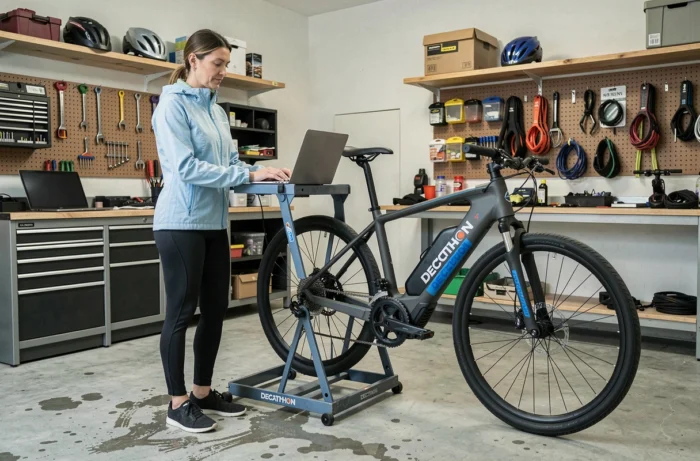
The battery concentrates the majority of concerns. On forums, questions revolve around two distinct situations that need to be separated for a correct diagnosis.
Progressive Loss of Autonomy
A lithium-ion battery naturally loses capacity over charge cycles. This degradation is normal and does not constitute a breakdown. Users who notice a decrease in autonomy after a few years of daily use are facing classic chemical aging. Storing the battery fully charged or at zero for long periods accelerates this phenomenon.
Battery That No Longer Charges at All
The more concerning scenario is that of a battery that refuses to charge at all. On Decathlon models, the most reported causes on forums are:
- A faulty charger, which can be tested by measuring the output voltage with a basic multimeter, or by trying a compatible charger
- A BMS (battery management system) that has gone into safety mode after a deep discharge, blocking any recharging
- A physically damaged charging connector, often due to forced plugging or a fall of the bike
Testing the charger before blaming the battery is the first logical step, and one that workshop technicians systematically apply.
Electric Assistance Cut-off While Riding: Sensors and Controller
Sudden cut-offs of assistance while pedaling are one of the most frequent topics in discussion threads. The pedal sensor (rotation sensor or torque sensor depending on the model) transmits the information that the cyclist is pedaling to the controller. If this signal is interrupted, the controller cuts off assistance even if the battery is full.
On some Riverside and Elops models, the pedal sensor is a magnetic sensor positioned at the crankset. A misalignment of the magnetic disc, caused by a shock or insufficient tightening, is enough to disrupt the reading. Field reports vary on this point: some users solve the problem by simply repositioning the magnet, while others must replace the entire sensor.
The controller itself can also be at fault, but this is rarer. A defective controller generally generates an identifiable error code on the console screen. Noting the error code displayed before any manipulation helps save time, whether for a forum search or a workshop visit.
Warranty and Right to Repair: What the Law Changes for Decathlon E-Bikes
Beyond the technical diagnosis, the question of financial coverage for a breakdown constantly arises in discussions. Two legal levers deserve to be known.
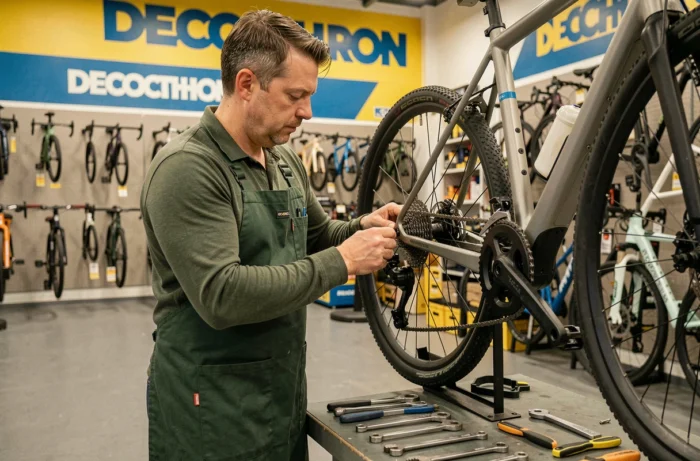
During the two years of legal warranty for conformity, if the buyer chooses repair rather than replacement in case of defect, the warranty is automatically extended by twelve months. If the seller imposes a replacement when repair has been requested, the legal warranty is renewed for two years from the replacement. These provisions, stemming from the French legal framework, constitute a concrete lever for e-bike owners facing recurring breakdowns.
Moreover, Decathlon applies a policy of availability of spare parts that goes beyond standard legal obligations. This approach has a direct impact on the possibility of repairing a bike rather than replacing it entirely, a point that forums do not always detail.
A right to repair is also established for certain categories of products considered technically repairable. The list does not yet cover all e-bikes, but it is expected to evolve each year. For a Decathlon electric bike that has broken down outside of warranty, checking if the model falls within this scope can make the difference between a manageable bill and a complete repurchase.
Before posting on a forum or going to a workshop, gathering the bike’s serial number, any error code, and the purchase date allows for more precise answers. The most common breakdown remains the simplest to resolve: a connector to check, a sensor to reposition, a charger to test. Structural problems with the battery or controller do exist, but they represent only a fraction of the cases reported by users.