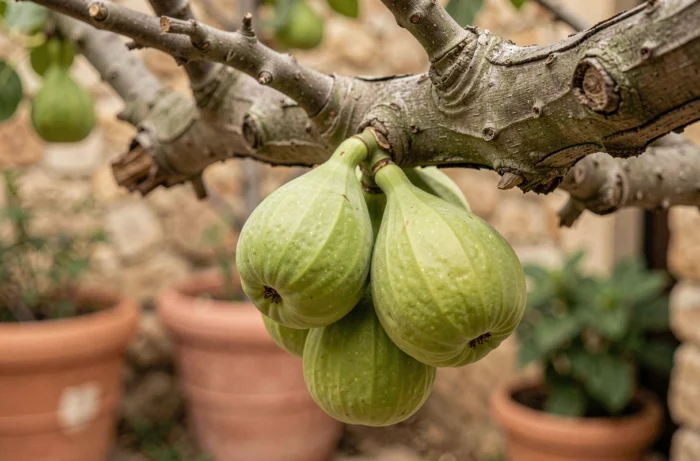
The fig is one of the most appreciated fruits in the Mediterranean basin, consumed fresh or dried since antiquity. Before full ripeness, this false fruit exhibits biochemical characteristics very different from those of the ripe fruit. The white latex that oozes abundantly from an unripe fig contains active substances capable of causing sometimes severe skin and digestive reactions. Understanding these mechanisms helps avoid inconveniences that simple caution in the garden or at the market does not always prevent.
Fig tree latex and ficin: the irritating mechanism of the green fig
When a still green fig is detached from its branch, a milky liquid immediately beads at the break. This plant latex is much more abundant on an unripe fruit than on a fully mature fig. It notably contains ficin, a proteolytic enzyme from the same family as papain (papaya) and bromelain (pineapple), according to the technical sheet from IngredientMD dedicated to the fig.
Ficin degrades proteins upon contact with the mucous membranes of the mouth and skin. In the mouth, this results in tingling, a burning sensation on the lips and tongue, and even small lesions if the ingested amount is significant. On the skin of the hands, the latex causes contact irritations sometimes confused with an allergy, whereas it is a direct chemical reaction.
This risk is not limited to consumption. Simply picking unripe figs without gloves exposes one to these irritations. People who harvest from their own fig tree in summer, before the fruits reach their final color, are the first affected. It is advisable to consult the recommendations from the Institut Droit & Santé to better understand the precautions to take regarding this type of food risk.

Furanocoumarins and phytophotodermatitis: the unripe fig under the sun
The latex and leaves of the fig tree contain furanocoumarins, including psoralen and bergapten. These compounds are photosensitizing: alone, they cause only moderate irritation. Combined with exposure to UVA, they trigger phytophotodermatitis.
The reaction manifests as intense redness, skin burns, blister formation, and in some cases, persistent pigmentation that can last several weeks. According to True Medical, which cites a medical publication reporting five clinical cases, these lesions appeared after contact with a preparation of fig tree leaves followed by sun exposure.
The trap lies in the delay. The skin reaction can be delayed by several hours, making it difficult for the affected person to establish a link with the fig. One handles the fruit in the morning in the garden, spends the afternoon in the sun, and the symptoms only appear the next day. This time lag complicates diagnosis and delays treatment.
Fig tree sap and fruit flesh: a distinction to be made
Online competitors often mix two distinct situations. The documented phototoxic risk concerns the milky sap and leaves of the fig tree, not the ordinary consumption of the flesh of a ripe fig. However, a fig picked too early retains a high proportion of this sap in the skin and around the peduncle. Biting into a green fig, therefore, means directly exposing oneself to the irritating latex orally.
The flesh of a fully ripe fig generally does not pose this problem: the concentration of ficin and furanocoumarins decreases significantly as it ripens.
Unripe figs and digestive disorders: what ficin causes in the intestine
Beyond skin reactions, ingesting unripe figs in quantity can disrupt transit. Ficin irritates the gastrointestinal mucous membranes and can cause abdominal cramps, nausea, or diarrhea in some individuals. The fibers of the green fig, which are harder and less soluble than those of the ripe fruit, exacerbate this mechanical irritation.
People suffering from irritable bowel syndrome are particularly vulnerable. Their intestinal mucosa, already weakened, poorly tolerates the enzymatic aggression combined with the intake of insoluble fibers from a fruit that has not completed its ripening.
- Direct irritation of the mucous membranes by ficin, with possible gastric burning sensation from the first green fig consumed.
- Laxative effect exacerbated by the insoluble fibers concentrated in the skin of the unripe fruit, which is tougher than that of the ripe fig.
- Increased risk of cross-reaction in individuals allergic to rubber latex, as ficin belongs to an enzymatic family close to natural latex allergens.

Recognizing a ripe fig: reliable criteria to avoid risks
Knowing how to identify a fig ready for consumption significantly reduces exposure to irritating substances. A ripe fig yields slightly under finger pressure without being so soft that it crushes. Its skin sometimes shows fine cracks near the peduncle, indicating that the sugars have reached their maximum concentration.
Color alone is not enough. Depending on the varieties (and there are several dozen cultivated in France), a ripe fig can be green, purple, black, or yellow. The most reliable criterion remains the softness to the touch combined with the absence of visible latex at the attachment point.
- To the touch: the fruit yields under slight pressure without being hard or stony.
- At the peduncle: absence of oozing white sap when detaching the fruit.
- By smell: a ripe fig emits a characteristic sweet fragrance, while a green fig remains almost odorless.
- On the surface: slight cracks or wrinkles on the skin indicate advanced ripeness.
If you harvest your own figs, wear gloves during picking to avoid prolonged contact with the sap. Wash your hands immediately after handling and avoid sun exposure if latex has touched your skin.
The fig remains a fruit with recognized nutritional qualities, rich in fiber and minerals. The problem does not come from the fig itself, but from its stage of ripeness at the time of consumption. Waiting a few more days before picking or buying is usually enough to eliminate the risks associated with latex and furanocoumarins.